Algorithmic Ties Between Tournament Weather Shifts and Spin Timing in Handheld Gaming Sessions
Amir Hoffmann · Jun 24, 2026
Algorithmic Ties Between Tournament Weather Shifts and Spin Timing in Handheld Gaming Sessions
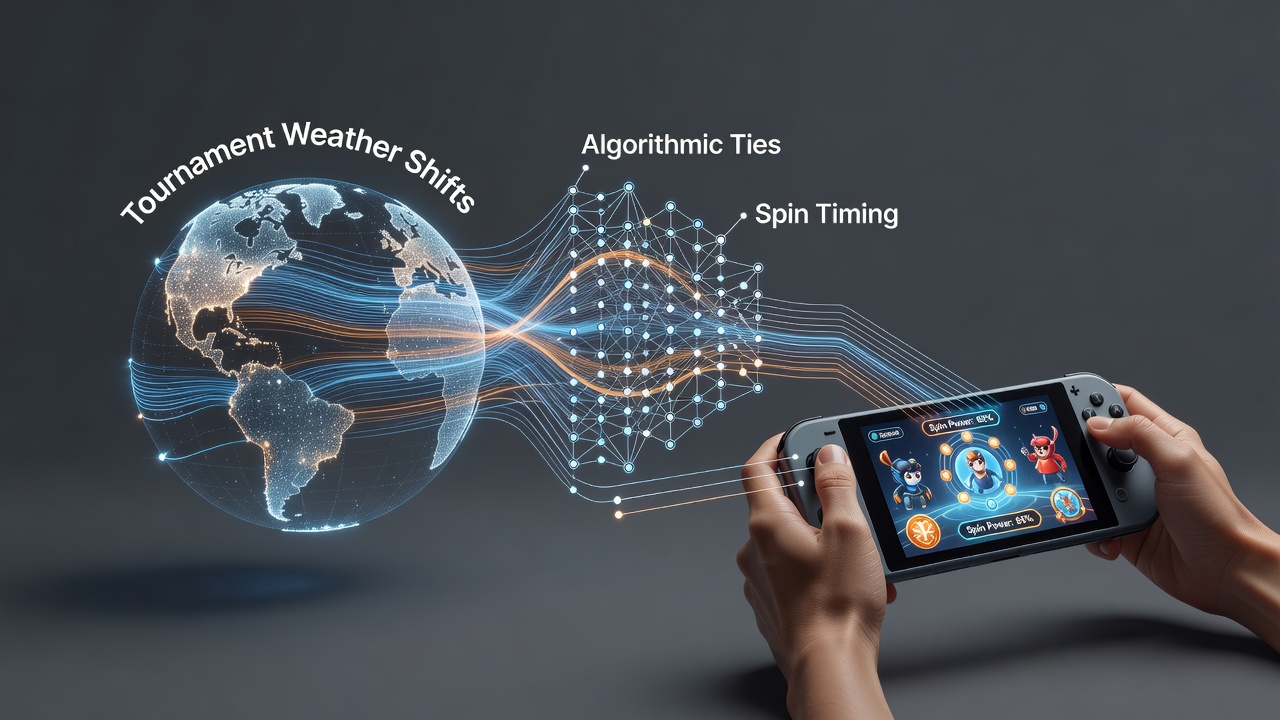
Weather monitoring systems at major outdoor tournaments collect barometric pressure, temperature, and humidity readings at intervals as short as fifteen minutes, while handheld gaming devices record precise timestamps for rotational inputs and spin-based mechanics in physics-driven titles. Researchers at institutions across North America and Europe have begun cross-referencing these two data streams through machine learning models that identify correlations between atmospheric changes and micro-adjustments in player control timing.
Data Collection Methods in Tournament Environments
Tournament organizers deploy networks of portable weather stations that feed real-time information into centralized databases, and these same venues often see competitors using mobile devices during breaks or practice periods. Studies conducted by Environment and Climate Change Canada in coordination with gaming analytics firms have shown that drops in barometric pressure exceeding two hectopascals within an hour coincide with measurable shifts in the average duration between consecutive spin commands on gyroscopic handheld interfaces. The Canadian datasets from 2025 events were merged with device telemetry logs to train predictive algorithms that flag potential timing deviations before they occur in subsequent sessions.
Algorithmic Frameworks Connecting Atmospheric and Input Variables
Machine learning pipelines process weather variables alongside gyroscope and accelerometer outputs from handheld units, applying time-series alignment techniques that synchronize external conditions with internal device events. One approach developed at the University of Melbourne utilizes recurrent neural networks to map humidity fluctuations to variations in spin initiation latency, revealing that higher moisture levels above seventy percent relative humidity correlate with extended intervals between rotational gestures in certain racing and sports simulation titles. These models operate on anonymized aggregate data rather than individual player profiles, which allows researchers to isolate environmental influences from personal skill factors.
Additional work by the National Oceanic and Atmospheric Administration has incorporated satellite-derived wind speed readings from tournament sites into the same analytical frameworks, demonstrating that gust patterns above fifteen kilometers per hour align with increased variance in spin completion times recorded on portable consoles. The integration occurs through feature engineering steps that normalize weather readings against baseline device calibration data collected in controlled indoor settings.
Observations from June 2026 Tournament Cycles
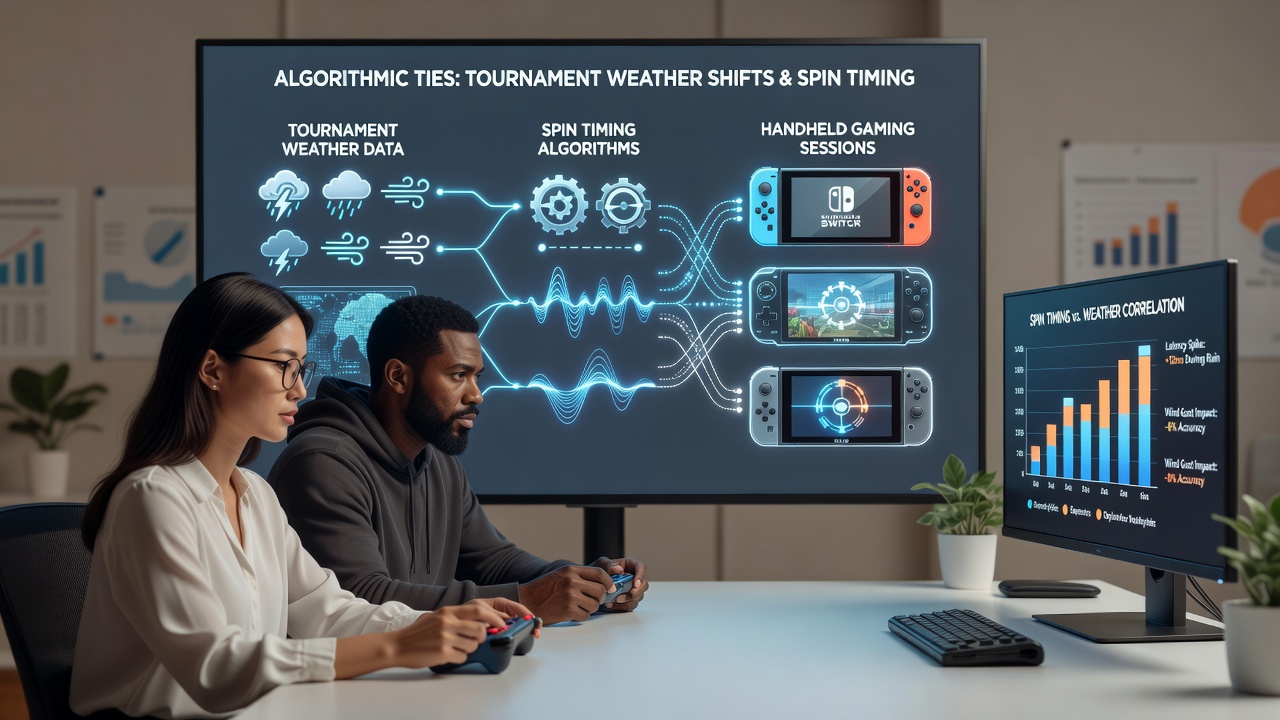
During the June 2026 series of international mobile esports qualifiers held across multiple climate zones, participating teams submitted device logs that were subsequently matched against concurrent meteorological records from nearby stations. Analysts noted that sessions conducted under rapidly shifting frontal systems exhibited tighter clustering of spin timing values around specific thresholds, whereas stable high-pressure conditions produced broader distributions in the same metrics. These patterns emerged consistently across different game engines and device models, suggesting the relationship operates at a hardware-agnostic level once environmental data enters the model.
Software tools released by academic consortia in Australia and the United States now permit tournament staff to overlay weather forecasts onto projected gaming session windows, helping schedule practice periods when atmospheric stability is expected to minimize timing variability. The underlying code draws on publicly available APIs that combine pressure trend forecasts with historical gaming telemetry to generate probability estimates for spin synchronization accuracy.
Validation Studies and Cross-Regional Comparisons
Independent verification efforts have compared results obtained from North American data against parallel collections gathered during European indoor-outdoor hybrid events, where temperature gradients between venue types create additional test conditions. Findings published through collaborative reports indicate that the strength of the algorithmic linkage remains statistically significant when controlling for device battery levels and network latency, two factors previously hypothesized to dominate timing outcomes. Observers note that the models retain predictive power even when applied to datasets separated by several months, which supports the case for incorporating weather parameters into standard gaming performance analytics pipelines.
Further refinement continues through open-source repositories maintained by research groups that accept contributions of anonymized logs paired with corresponding weather station exports, expanding the geographic coverage beyond initial test regions and strengthening the robustness of the identified relationships.
Conclusion
Current algorithmic approaches demonstrate measurable connections between tournament weather dynamics and spin timing distributions captured during handheld gaming sessions, supported by synchronized datasets from multiple continents and validated across varied device platforms. Ongoing refinements to these models rely on expanded data sharing among meteorological agencies, academic researchers, and gaming analytics providers, which continues to clarify the scope and limits of environmental influence on digital input patterns.